

Your benefits with our MDG consulting
More than just an IT project
MDG is a strategic investment in the future of your company.
With SAP MDG and our many years of expertise in master data management, you can turn your data into a valuable asset - and secure a sustainable competitive advantage.
Our MDG consulting goes far beyond mere software implementation:
- Individual MDG solutions that are precisely tailored to your business requirements
- Experienced consultants who will support you from the initial concept to training your employees
- A wide range of MDG tools and methods for developing a holistic data strategy

Our offer

Unbeatable advantages for your business.
Integration into the data pipeline for cleansed data
No more legacy data due to S/4HANA migration
Easily visualize your complex data with Fiori
Optimize your business partner strategy
Develop business rules and AI-based algorithms
Data compliance & security with SAP Performance
For your Master Data Quality



Find out more about our Data Governance Tools
Business Partner
Automate the management of business partner data, including roles such as suppliers and customers. Ensure that your data is always up-to-date and correct across your entire network.
Material Master
Optimize the creation and maintenance of product data to increase the effectiveness of your inventories. At the same time, increase data quality and create the basis for efficient logistics processes.
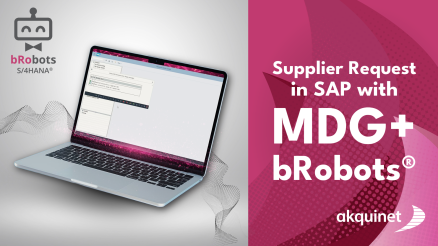
MDG+ bRobots®
Discover our innovative solutions that use advanced automation and intelligent data management to sustainably increase your company's performance.
Download flyer
Get detailed information in our flyer or check out the whitepapers.
Data quality in master data and specific focus areas. Corporate Data Organization & Governance – beyond traditional data management.
OUR CERTIFICATE
Trust our Expertise
OUR SATISFIED CUSTOMERS
Enjoying success



You might also be interested in this
Master Data Governance FAQs
What is Master Data Governance (MDG)?
Master data governance refers to the management and control mechanisms used to ensure data accuracy, consistency and security within an organization. It helps companies to maintain high-quality master data across different business units.
Why is MDG important for companies?
MDG is critical as it ensures that master data is consistent and trustworthy, which supports effective decision making, regulatory compliance and operational efficiency.
How does MDG improve data quality?
MDG systems enforce guidelines and rules that standardize data entry, validate data accuracy and eliminate data inconsistencies, improving data reliability and quality.
What are the key factors of a successful MDG strategy?
A successful MDG strategy includes clear management guidelines, designated data owners, effective data quality management tools and ongoing training to ensure data integrity and compliance.
Can MDG be integrated into other IT systems?
Yes, MDG can be seamlessly integrated with other IT systems such as ERP, CRM and BI tools to ensure uniform and consistent data management across all platforms and departments.
What advantages does the implementation of MDGs offer an organization?
Implementing MDG can bring significant benefits, such as increased data security, better regulatory compliance, smarter operational decisions and increased efficiency through optimized data processes.
What are the 4 pillars of data governance?
1. Get clear – Transparency & clarity
The foundation of data governance is clarity. Organizations need a shared understanding of their data:
What data exists?
What does it mean?
Who owns it and who is responsible?
Clear definitions, roles, rules and documentation create transparency and make data usable across teams.
2. Get clean – Data quality & standards
Good governance requires reliable data. This pillar focuses on:
Data quality rules, validations and standards
Consistency across systems
Removing errors, duplicates and inconsistencies
Clean data is the prerequisite for trust, reporting and decision-making.
3. Stay clean – Processes & accountability
Data governance is not a one-time activity. To keep data clean, organizations need:
Clear processes and responsibilities
Ongoing monitoring and controls
Governance embedded in daily workflows
This ensures that data quality and compliance are maintained over time.
4. Get ahead – Enablement & value creation
The final pillar looks forward. Data governance should not slow teams down, but enable them to move faster:
Scalable rules and automation
Alignment with business goals
Using governed data for analytics, innovation and AI
Strong governance helps organizations create value from data and stay future-ready.
Your contact person

Christian Wagner
Managing Director
Consultant Master Data Governance